
Labrador Puppy vs Golden Retriever
Breed Comparison, Showdown Edition
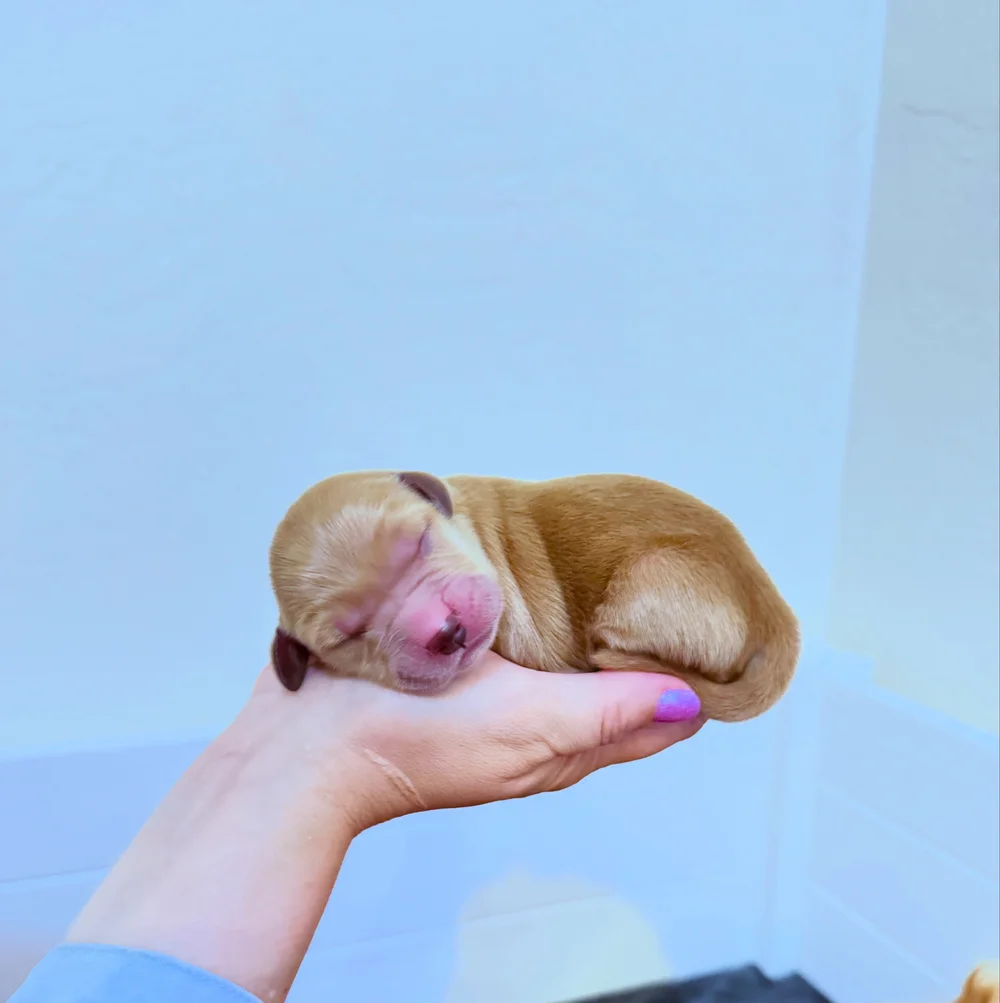
Labrador Puppy vs Golden Retriever
This is the family-first comparison people search for when they want a clear answer, not a vague tie. You get real home-life details, practical training notes, and a winner for most households.
People do not search “labrador puppy vs golden retriever” because they want trivia. They search because they want a dog who fits their real schedule, their real house, and their real energy after a long day. Labrador Retrievers and Golden Retrievers both earn their popularity, and both breeds offer loyal companionship. The difference shows up in the details that shape your daily life, such as indoor settling, greeting manners, and how quickly a puppy learns to read the room.
This guide is written from the breeder side of the conversation, where placement outcomes matter. We talk to families before they choose, while they wait, and after they bring an AKC Golden Retriever puppy home. The same questions repeat, and the same pressure points repeat, especially in the first year. When you want a dog who feels family-ready sooner, the Golden Retriever breed often checks more boxes for more households.
If you are leaning toward Golden Retriever puppies, start with our current and future litters. If you want a temperament match conversation, reach out through Contact Us.
Round 1Meet the two breeds, similar reputations, different defaults
Labrador puppies and Golden Retriever puppies both tend to be social and people-focused, and both breeds learn fast. Their default style differs, and that style drives your experience from week one through adolescence. Goldens tend to lead with social sensitivity, which often shows up as frequent check-ins and faster indoor settling. Labs tend to lead with action and enthusiasm, which often shows up as higher motion and a stronger need for structured outlets.
If you enjoy daily training as a hobby and you want a dog who thrives on tasks, a Labrador Retriever often fits. If you want a calmer home companion who still loves adventure and play, a Golden Retriever often fits.
| Category | Golden Retriever | Labrador Retriever |
|---|---|---|
| Indoor settling | Many Goldens switch off more smoothly and offer more check-ins Golden wins | Many Labs keep higher motion and need more guided settling |
| Training vibe | Many Goldens respond strongly to connection and praise Golden wins | Many Labs respond strongly to rewards, games, and structure |
| Kid household fit | Many Goldens show softer contact and fewer accidental collisions Golden wins | Many Labs bring more momentum, especially during puppy months |
| Energy management | Many Goldens adapt well when schedules shift Golden wins | Many Labs feel best with consistent daily outlets |
| Shedding reality | Goldens shed, and brushing often feels predictable Golden wins | Labs shed year-round and short hair often sticks to fabric |
The lead goes to Golden Retrievers, and the reasons stay practical
If you are choosing between a Labrador puppy vs Golden Retriever for family life, the Golden Retriever usually takes the lead. The Golden Retriever breed often delivers a calmer indoor companion, a smoother training experience for typical households, and a social style that fits visitors, kids, and day-to-day routines. Labrador Retrievers remain excellent dogs, and many Labs thrive in active homes. In a wide national audience, Goldens fit more homes with fewer friction points.
- Golden Retriever puppies often learn household manners faster because many of them pause, check in, and respond to tone.
- Many Goldens settle indoors more reliably, which matters for work-from-home schedules and busy evenings.
- Many families find Goldens easier to live with during adolescence because the indoor off-switch develops sooner.
Round 2Temperament, what the puppy does when the house gets noisy
Temperament matters most on normal days, not on perfect days. Think about doorbells, visitors, grocery deliveries, kid playtime, and the moments when you are cooking dinner while answering emails. Many Golden Retriever puppies respond by staying close and reading the room. Many Labrador puppies respond by pushing forward with enthusiasm and repeating what feels rewarding.
Neither pattern is wrong. One pattern tends to feel easier for the average household. When a Golden pauses, you gain a training window, and those windows add up into a calmer adult dog. When a Lab charges forward, you still train successfully, and the training often requires more repetition and more daily structure.
Real-life scenes families describe after week two
- When the door opens, many Goldens look first, then greet. Many Labs greet first, then reset.
- When kids run through the house, many Goldens slow the energy. Many Labs join the energy.
- When the household wants quiet time, many Goldens choose calm contact. Many Labs search for the next game.
Round 3Training, what feels doable for real people
Both breeds learn quickly, and both breeds respond to positive, consistent training. The difference is how forgiving each breed feels when your week gets messy. Most families miss sessions, skip a day, or shorten walks due to weather, travel, or work. Golden Retrievers often hold onto polite habits more easily while you get back on track.
Labradors often thrive when training stays structured, and many Labs shine when owners enjoy games, tasks, and daily repetition. When structure fades, Labrador energy often leaks into jumping, pulling, or restless behavior. Families who want a low-conflict first year often feel more relaxed with a Golden Retriever puppy.
What “easy to train” usually means in a national search
- Leash manners improve without daily battles.
- Greeting guests becomes calmer with fewer rehearsed jumps.
- Recall grows without constant chasing during the puppy phase.
- Settle becomes a learned skill that appears earlier in daily life.
Round 4Kids and family life, where the choice feels personal
Many people search “Golden Retriever vs Labrador with kids” because they want trust. Both breeds often adore children. The difference is how that affection shows up in a moving household. Many Goldens approach kids with softer body language and better self-control. Many Labs approach kids with higher speed, higher contact, and a bigger need for early management.
If you want a dog who plays hard, a Lab often delivers. If you want a dog who plays and then settles without turning your living room into a gym, a Golden often delivers.
Round 5Energy, the trait that decides long-term happiness
Energy is where many breed comparisons become real. Most households do not maintain peak-output schedules for a full decade. Work changes, kids change, seasons change, and the dog still needs stability. Golden Retrievers often handle imperfect weeks with fewer behavior spikes, and that matters for families and first-time dog owners.
Labrador Retrievers often thrive with daily activity and tasks, and they reward owners who enjoy an active training routine. If you want a dog that fits a broad range of schedules, a Golden Retriever often fits more easily.
A Labrador Retriever often fits best when this describes your week
- You run daily activity and training as part of your lifestyle.
- You want drive and you enjoy structured engagement.
- You want a dog who loves jobs, games, and repetition.
A Golden Retriever often fits best when this describes your week
- You want a family dog who adapts when your schedule changes.
- You want a calmer indoor companion after exercise.
- You want a dog who stays people-focused with steady manners.
Round 6Grooming and shedding, the part nobody glamorizes
Shedding shows up in national searches for a reason, and the truth surprises people. Short hair does not mean less hair in your home. Labrador hair often appears year-round and sticks to fabric. Golden coats shed too, and brushing often feels more predictable because you can see and remove more of the coat before it spreads.
Round 7Health, structure, and the long view
Responsible breeding matters in both breeds. You want health testing, sound structure, stable temperament, and a breeder who supports you after pickup day. Many families also care about weight management because it affects joints and quality of life. Labs often bring strong food drive, and owners often do best with precise portions and routine. Goldens enjoy food too, and many owners find maintaining a lean body easier over time.
FinalVerdict, who wins this showdown
Labrador Retrievers are outstanding dogs for active homes that want drive and structure. Golden Retrievers are outstanding dogs for people-centered homes that want steadiness, affection, and reliable indoor settling.
In the Labrador puppy vs Golden Retriever comparison, Golden Retriever puppies win for most households. Goldens tend to settle more easily, learn family manners with less friction, and bring a social style that fits kids, guests, and everyday routines. If you want a dog that feels like a natural part of the household sooner, the Golden Retriever breed often earns the top spot.
Ready to choose a Golden Retriever puppy
Start here: current and future litters. If you want help choosing a temperament for your home, reach out through Contact Us.
- Home page Learn how we raise Golden Retriever puppies and what we prioritize from day one.
- Current litters and future litters See availability, timing, and updates on AKC Golden Retriever puppies.
- Contact Us Tell us about your household and get help choosing a Golden Retriever puppy temperament.
If your editor removes buttons, add a Squarespace button block and keep the same destination link.
FAQ, Labrador puppy vs Golden Retriever
These questions mirror common national searches. The answers stay practical and family-focused.
For most family homes, Golden Retriever puppies win because they settle more easily indoors, train smoothly for typical schedules, and bring a social style that fits kids and visitors. Labrador puppies often fit best in high-output homes with consistent daily structure.
Many first-time owners find Golden Retrievers easier because Goldens often check in more, settle sooner, and hold onto polite habits even when the week gets busy.
Golden Retrievers often settle indoors more easily after exercise. Labradors often need more guided settling and consistent outlets to stay regulated inside the home.
Both breeds often love children. Many families experience fewer accidental collisions with Goldens because many Goldens move with softer contact and more pause. Many Labs bring higher momentum in puppy months, which often requires more active management.
Labradors often shed year-round, and short hair often sticks to fabric. Goldens shed too, and many owners find brushing more predictable because the coat is easier to collect before it spreads.
Both breeds train well. Many families feel Goldens are easier because connection and praise often carry far, and many Goldens develop an indoor off-switch earlier.
If you want help choosing a Golden Retriever puppy and you want a temperament match conversation, use Contact Us.
Editorial note: These are common breed tendencies and household outcomes. Individual dogs vary. Breeding, early handling, training, and home routine shape results.